Healthcare practices today are not struggling with demand. They are quietly losing revenue through missed calls, delayed responses, and overloaded front desks. This is exactly where AI in healthcare is creating a real, measurable impact.
From intelligent call handling to instant patient engagement, AI is no longer a concept of the future. It is becoming a practical solution for clinics that want to grow without increasing operational stress.
The Growing Role of AI in Healthcare
The adoption of AI in healthcare is accelerating across the US and UK, especially in patient communication and administrative workflows.
Practices today face:
- High call volumes
- Limited front desk staff
- Increasing patient expectations for instant responses
AI bridges this gap by handling repetitive, time sensitive interactions efficiently, allowing human staff to focus more on patient care.
The Hidden Revenue Leak in Practices
One of the biggest challenges in medical practices is often underestimated: missed calls.
In busy clinics, missed calls can reach up to 30 percent. Each missed call is not just a missed conversation, it is a missed appointment and lost revenue.
Other common issues include:
- Long wait times on calls
- Delayed responses to patient inquiries
- Manual appointment handling errors
This is where AI powered healthcare automation becomes essential.
How AI in Healthcare Solves Front Desk Challenges
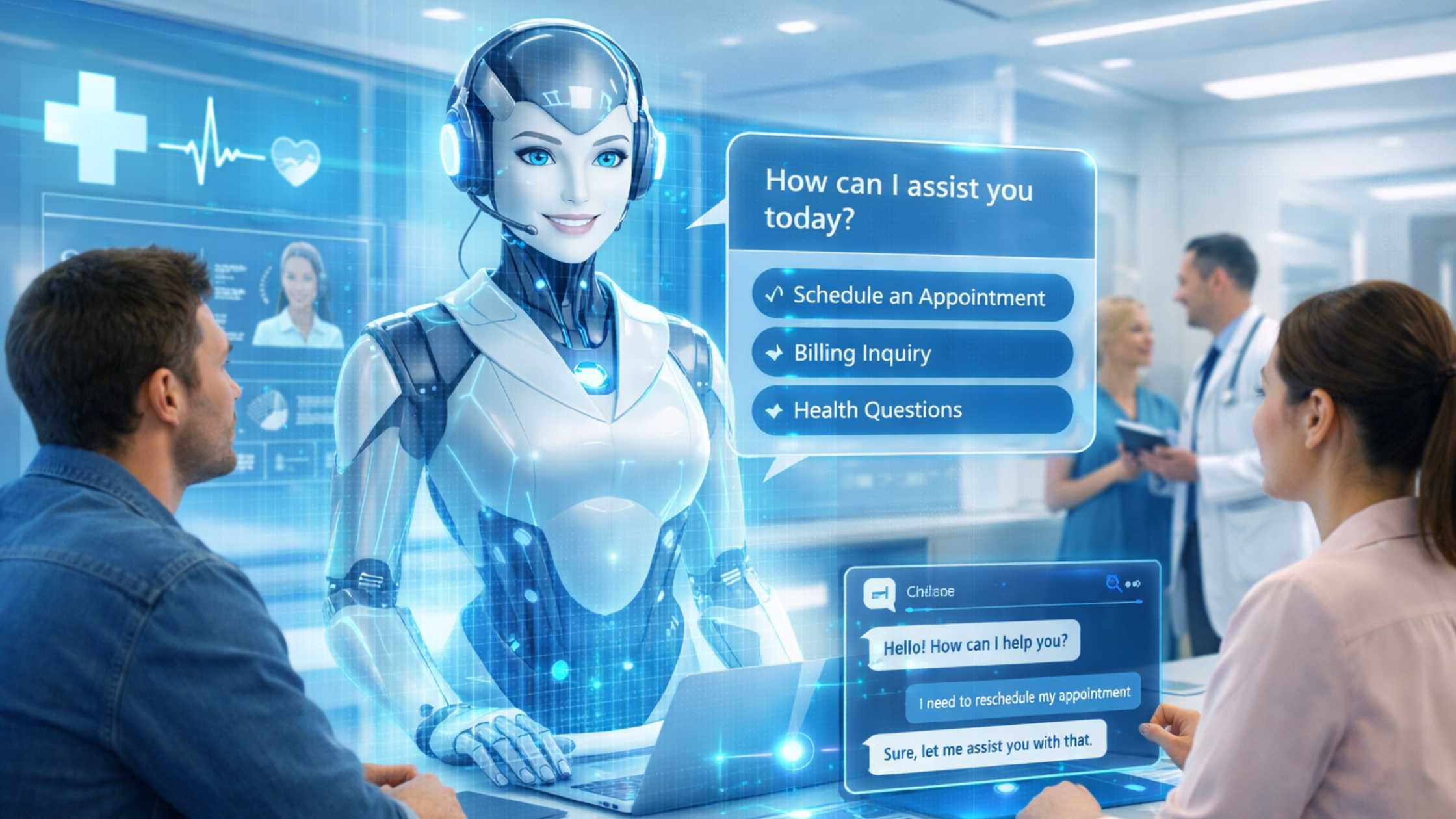
AI transforms front desk operations by introducing speed, consistency, and round the clock availability.
- AI receptionists for calls
- AI chatbots for messaging platforms
- Automated scheduling systems
The result is a smarter, always active front desk that works 24 hours a day.
AI Receptionists: Never Miss a Patient Call
AI receptionists are one of the most powerful applications of AI in healthcare.
- Answer all inbound calls anytime
- Book, reschedule, and cancel appointments instantly
- Handle common patient queries
- Route complex cases to human staff
Impact on Practices
- Increased appointment bookings
- Reduced dependency on large teams
- Consistent patient communication
AI Chatbots: Instant Patient Engagement at Scale
AI chatbots extend the benefits of AI in healthcare across websites, messaging apps, and social platforms.
- Instant responses to patient queries
- Automated booking and reminders
- Basic patient pre screening
- Structured data capture
Key Benefits
- Higher conversion rates
- Lower no show rates
- Better patient experience
Real Operational Impact for Practices
Revenue Growth
No missed calls means more appointments and better conversion.
Cost Efficiency
Lower administrative load and reduced staffing pressure.
Better Patient Experience
Always available communication with quick responses.
Improved Staff Productivity
More focus on patient care instead of repetitive tasks.
Why AI in Healthcare is No Longer Optional
- Instant responses
- Easy appointment booking
- Seamless communication
Adopting AI in healthcare is no longer just about innovation. It is about staying competitive.
AI in healthcare refers to the use of artificial intelligence technologies to automate processes, improve patient communication, and enhance operational efficiency in medical practices.
An AI receptionist uses voice technology to answer calls, manage appointments, handle common queries, and route calls to human staff when needed.
Yes. AI receptionists can answer calls at all times, ensuring that no patient inquiry is missed, which directly improves appointment bookings and revenue.
AI chatbots help automate patient communication, appointment booking, reminders, and data collection, improving both efficiency and patient satisfaction.
No. AI is designed to support and enhance human teams by handling repetitive tasks, allowing staff to focus on more complex and patient centered responsibilities.
Modern AI healthcare solutions are designed to comply with regulations like HIPAA in the US, ensuring patient data privacy and security.




Leave a Reply